The Federal Reserve left its target range for the federal funds rate unchanged at 3.75 to 4 percent after its October 27–28, 2026 meeting. The decision was not unanimous. The published minutes say that two participants preferred a quarter-point increase, while the majority voted to maintain the range. The next scheduled meeting is December 8–9.
A rate decision can dominate financial headlines, but the federal funds target is not the interest rate on every mortgage, credit card, savings account, or auto loan. It is a short-term policy range that helps guide overnight borrowing between banks. Other rates respond to different benchmarks, contract terms, funding costs, market expectations, and institution decisions. The effect on a household depends on the product it already has and the terms attached to it.
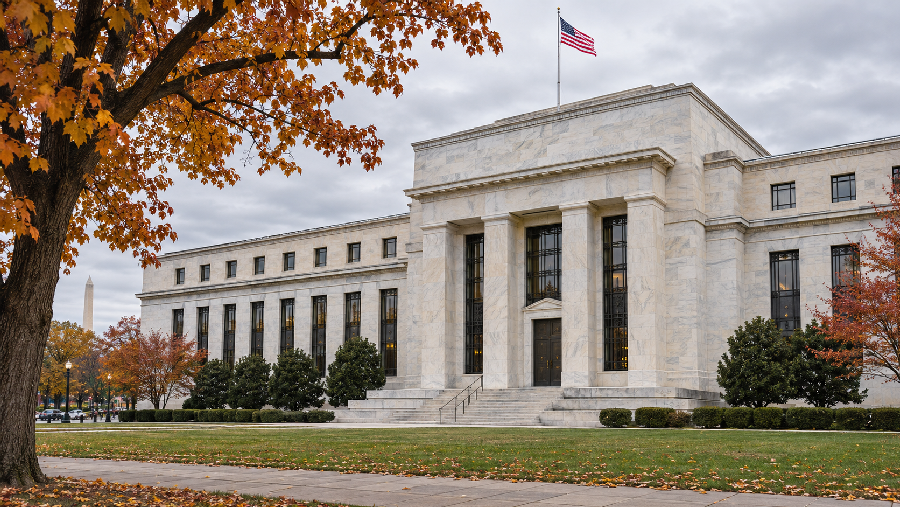


What the federal funds target is
Commercial banks and other eligible institutions lend reserve balances to one another, usually overnight. The federal funds rate is the interest rate on those loans. The Federal Open Market Committee sets a target range as part of monetary policy, and the Federal Reserve uses its tools to keep the effective rate within that range. The target is one part of a broader effort to influence financial conditions and support the central bank’s goals for employment and stable prices.
When the target changes, money markets and some short-term borrowing costs can respond quickly. But the policy rate is not a universal price list. A bank’s prime rate, a credit-card annual percentage rate, a deposit yield, and a long-term bond yield are separate rates. They may move by different amounts and on different schedules.
The October minutes also show that policymakers discussed economic conditions and risks from several directions. A vote to hold the range describes the committee’s decision at that meeting. It does not guarantee that the rate will stay unchanged at the next meeting, nor does one dissent establish what the committee will do later. A meeting record is a snapshot of deliberation, not a promise about future policy.
Variable-rate borrowing and the benchmark connection
Some consumer borrowing costs are more closely linked to short-term rates than others. Many credit cards with a variable APR use a reference rate such as the prime rate plus a margin written into the card agreement. If the reference rate changes, the variable APR can change under the contract. The card’s margin, balance, promotional period, fees, and payment behavior still matter to the amount of interest charged.
A rate hold by itself does not lower or raise a variable APR. It means the target range did not change at that meeting. If a card’s reference benchmark stays the same, the rate attributable to that benchmark may also stay the same, subject to the agreement. If the benchmark changes later, the account terms specify how the APR is calculated and when the change takes effect. The cardholder agreement and account statement are more specific than a general news headline.
Home-equity lines of credit and some other variable-rate loans can also have rates that adjust as their index changes. Payment effects depend on the outstanding balance, remaining draw or repayment period, rate caps, and repayment rules. A rate increase may raise the interest charge or required payment. A rate decrease may reduce some costs, though the timing and calculation depend on the contract. There is no single adjustment schedule that applies to every lender or product.
Fixed-rate debt works differently. A fixed APR ordinarily does not reset just because the Federal Reserve changes its target. The monthly principal-and-interest payment on a fixed-rate mortgage generally stays level under the loan terms, although property taxes, insurance, escrow shortages, or other charges can change the total amount a borrower sends each month. An introductory rate or promotional APR can also have an end date specified in the agreement.
Why mortgage rates may move before a meeting
Longer-term interest rates are shaped by expectations about future short-term rates, inflation, economic growth, the supply and demand for bonds, and the compensation investors require for holding long-term debt. Mortgage rates often track yields on longer-term securities more closely than the current overnight policy rate. As a result, mortgage offers can change before a committee meeting if markets revise their expectations.
This is one reason a policy hold does not necessarily mean mortgage rates will be unchanged that day. If investors already expected the hold, it may have been reflected in market prices beforehand. If the accompanying statement or press conference changes expectations, longer-term yields can move in either direction. The relationship is not mechanical, and the next mortgage quote depends on market conditions and lender pricing at that time.
For a homebuyer who has not locked a rate, the rate quoted by a lender is the relevant offer, subject to the loan type, points, fees, credit profile, down payment, property, and lock terms. A rate lock can protect the quoted rate for a specified period, often with conditions and possible costs. The Consumer Financial Protection Bureau explains that borrowers should review what happens if a lock expires, the loan changes, or the closing is delayed.
An adjustable-rate mortgage has its own structure. Many ARMs have an initial fixed period followed by adjustments at stated intervals using an index plus a margin, with caps that limit certain changes. The federal funds target is not necessarily the index on the mortgage. A borrower reviewing an ARM needs the note’s index, margin, first adjustment date, periodic caps, lifetime cap, and payment rules to understand how a change could affect the loan.
What a hold can mean for savers
Savings rates are set by financial institutions, often in response to their own funding needs, competition, expected future rates, operating costs, and product strategy. The federal funds target influences financial conditions, but it does not require a bank to raise or lower the rate paid on a savings account by the same amount. Two institutions can offer different yields even when the central bank has not moved its target.
Certificates of deposit typically specify a rate for a set term, subject to the account agreement. A rate hold does not reset the yield on an existing fixed-term CD. It can influence the environment in which a new CD is offered, but institutions set their own product rates. Early-withdrawal rules and renewal terms are important because they determine what happens if money is accessed before maturity or automatically rolls over.
For an account with a variable rate, the institution may change the yield according to its terms. A saver may see the rate remain steady, rise, or fall without a one-for-one relationship to the Fed’s target. The account disclosure states whether a rate is variable and what conditions apply. The advertised annual percentage yield also assumes a stated compounding pattern and may require the account to meet minimum balance or activity requirements.
Rate levels also affect savers and borrowers differently. A higher yield can provide more interest to people who hold cash in eligible accounts, but higher borrowing costs may weigh on households carrying variable debt. When rates decline, some borrowing costs can ease, but cash yields can also fall. The distribution of effects depends on how much a person borrows, saves, and where their money is held.
Why one decision does not reach every household at once
Monetary policy affects the economy through multiple channels and with lags. Changes in short-term funding conditions can influence loan and deposit pricing, while credit availability, market expectations, spending, hiring, and investment respond over time. Those adjustments are not immediate or uniform. A bank can keep a product rate unchanged, a lender can reprice a loan for reasons unrelated to a single meeting, and a household may not apply for credit at all.
Borrowers with variable-rate balances may be exposed sooner to a benchmark change than people holding fixed-rate loans. But the size of the effect depends on the balance and contract. Someone with a small balance can see a different dollar impact from someone with a large balance, even if both have the same APR change. A card’s minimum payment formula may also differ from the amount of interest that accrues.
People with little debt and substantial interest-bearing savings may notice account yields more than loan costs. A household with both a mortgage and a savings account can face several different rate mechanics at once. There is no single description of the Fed’s decision that captures every balance sheet.
Higher interest rates can restrain borrowing and spending, but they can also make refinancing, business investment, or a home purchase more expensive. Lower rates can ease some financing costs while reducing the yield available on certain deposits. The effects depend on inflation, income, asset prices, employment, and how financial institutions transmit the change. Policy decisions create trade-offs; they are not a guarantee of a particular result for an individual.
How to read the October decision in context
The official statement records the 3.75 to 4 percent target range after the October meeting. The minutes, released November 18, offer more detail on the discussion and the two participants who preferred an increase. Neither document supplies a personal forecast for credit-card APRs, mortgage offers, auto rates, or bank yields. Those figures are set through product terms and market conditions.
For an existing loan or deposit, the most useful documents are the note, account agreement, current statement, rate disclosure, and any notice of a change. Those documents identify the benchmark, margin, adjustment timing, introductory period, cap, fixed term, or other rules. A financial headline can explain broad context, but it cannot replace the contract that governs a specific account.
The FOMC’s December 8–9 meeting is the next scheduled policy meeting as of November 27, 2026. The calendar states the date; it does not imply what the committee will decide. Between meetings, inflation readings, employment data, and broader economic developments may change the outlook. Any interpretation of future policy remains uncertain until the committee announces a decision.
Sources and scope
- Federal Reserve, FOMC minutes, October 27–28, 2026
- Federal Reserve, FOMC calendars and meeting schedules
- Federal Reserve, monetary policy overview
- Consumer Financial Protection Bureau, fixed and variable APRs
- Consumer Financial Protection Bureau, fixed-rate and adjustable-rate mortgages
This article describes general rate mechanics as of November 27, 2026. It is educational and does not forecast market rates or recommend a borrowing or savings decision. Individual product agreements and current quotes control.
Leave a Reply