Liquidity vs Value: Why an Asset May Not Pay an Immediate Bill
An estimated value is not the same as cash available today. Sale timing, transaction costs and uncertainty can separate the two.
An asset valued at several thousand units may take too long to sell for a bill due this afternoon. Its estimated value and its liquidity measure different things: what it might be worth and how readily it can be exchanged.
A quoted price is not a completed sale
Investor.gov’s liquidity glossary identifies the risk that a lack of a market can prevent an investment from being bought or sold when desired. This is a US investor-education definition, but the underlying distinction between valuation and market access also helps explain everyday sales.
An asking price is what a seller requests; a completed payment is what a buyer actually pays. An appraisal supplies another estimate. These figures can differ because each records a different stage or judgment in the sale.
Speed can change the proceeds
| Scenario | Sale price | Sale costs | Net proceeds |
|---|---|---|---|
| Later sale, if a buyer is found | 5,000 | 150 | 4,850 |
| Immediate offer | 4,300 | 100 | 4,200 |
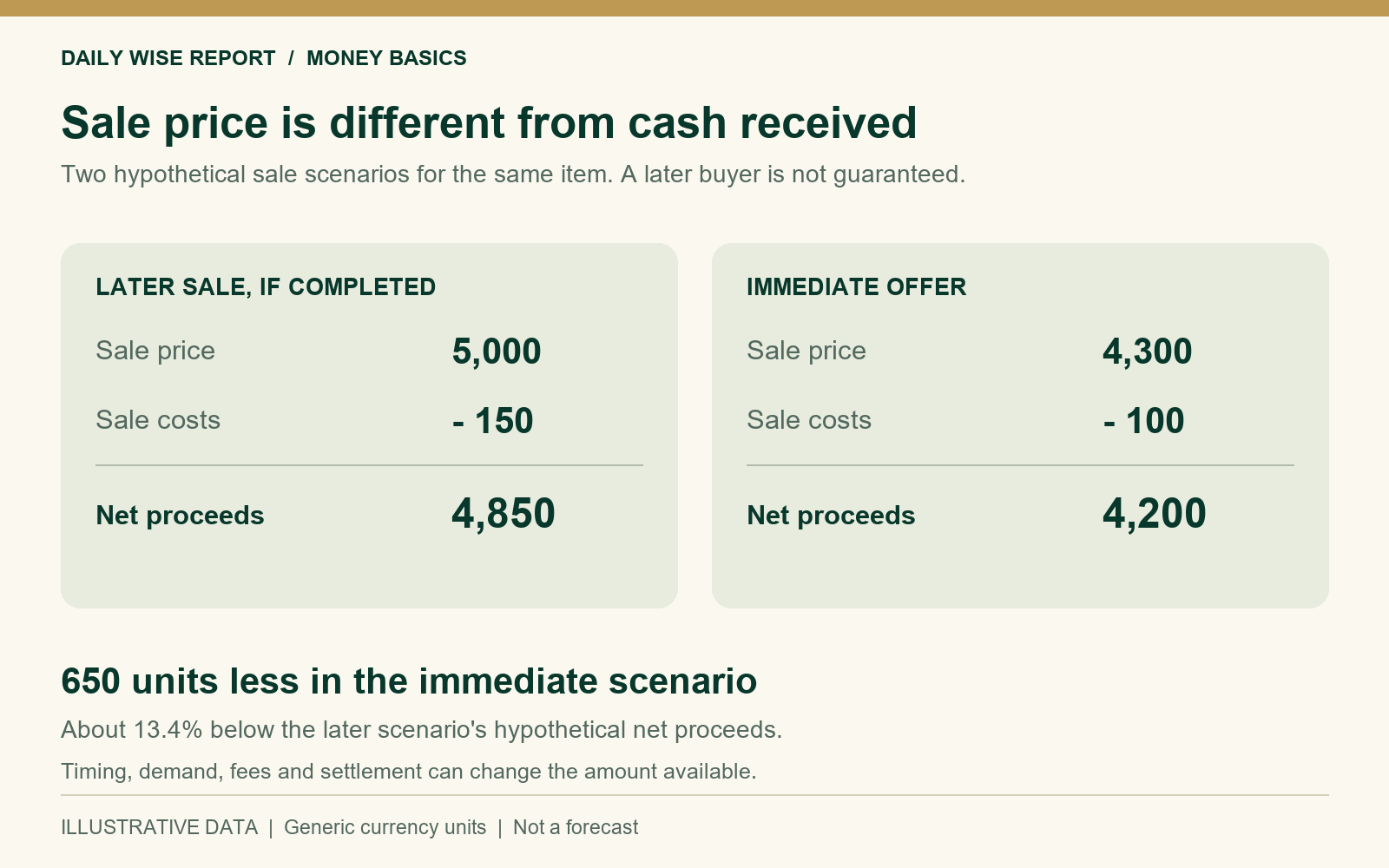
The immediate scenario produces 650 fewer units after costs. Relative to the later scenario’s hypothetical net proceeds, that difference is about 13.4%. It illustrates a possible cost of speed, not a rule that an urgent sale always produces a discount.
Waiting for the higher price leaves the seller exposed to storage costs, damage or changing demand. The assumed later sale may never happen at that price, so its estimated proceeds remain uncertain.
Liquidity and stability are separate
An asset can be easy to trade while its price fluctuates sharply. Another asset may have a relatively stable appraisal but few interested buyers. Being able to sell quickly does not establish that the amount received will match the original purchase cost.
There can also be a gap between selling and spending. A transaction may require settlement, processing or transfer before proceeds become accessible. The relevant timing depends on the asset, venue and country. A displayed balance or completed order is not always an immediately withdrawable amount.
Why net worth can overstate immediate capacity
Suppose an imaginary household has 400 units in accessible cash and an item valued at 5,000, with no debt in this simplified example. Its listed assets total 5,400. If an 800-unit payment is due today, accessible cash is still 400 units short until a sale or another inflow actually supplies funds.
The item’s estimated value belongs in the asset total, but meeting today’s bill depends on converting it to available cash in time. Limited immediate access changes its usefulness for that payment without making the asset worthless.
Limits of this analysis
All scenarios are invented for explanation. Actual sale prices, costs and settlement times vary. This article does not recommend selling, borrowing against or retaining any asset.
Leave a Reply