Everyday Costs
The prices you see. The costs that follow.
Everyday Costs, in depth.
 Analysis
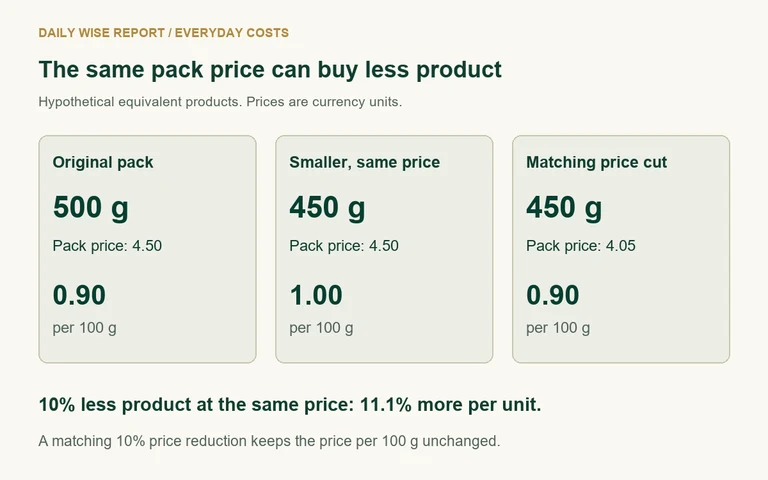
When a smaller pack raises the price per unit
An unchanged shelf price can buy less product. Comparing an equal quantity shows the increase, while the amount paid at checkout can tell a different story.
Read full article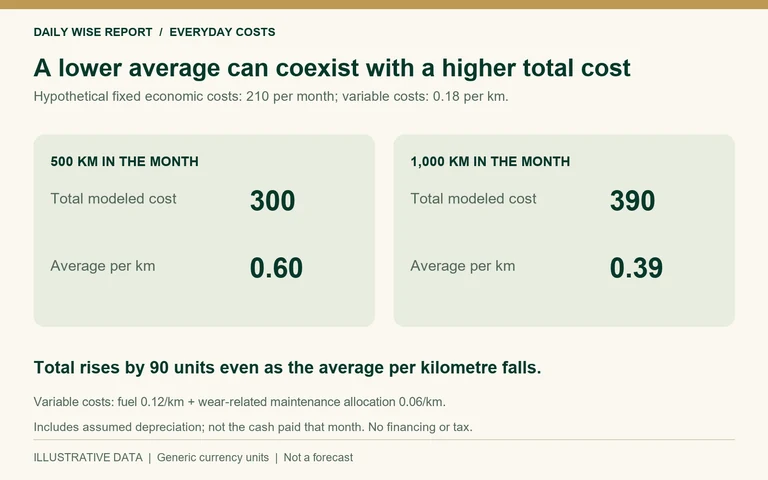 Analysis
Cost per Kilometre Can Fall While Monthly Driving Costs Rise
Fixed ownership costs are spread across distance. A lower average cost per kilometre does not mean a smaller total cost or a cheaper additional trip.
Read full article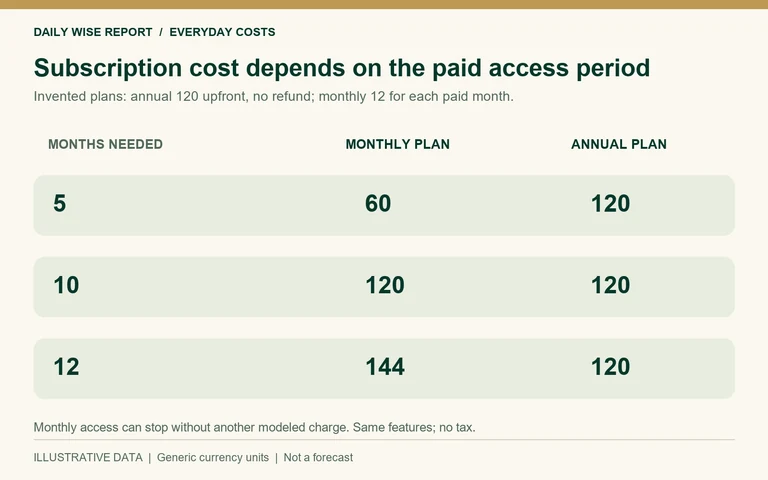 Analysis
An Annual Subscription Discount Depends on How Long the Service Is Used
A lower monthly equivalent can require a larger upfront payment. The relevant comparison changes if access is needed for only part of the year.
Read full article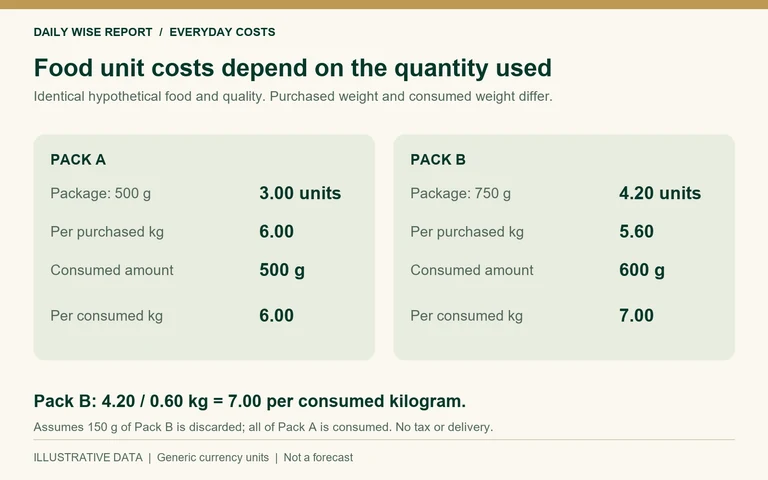 Analysis
A Lower Grocery Unit Price Can Still Cost More per Portion Used
Package price, price per kilogram and the cost of the amount actually consumed are different comparisons. Waste can change the result.
Read full article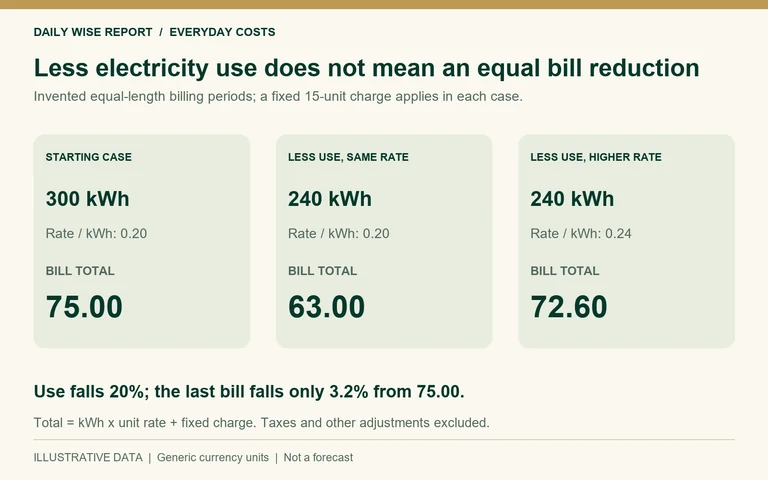 Analysis
Why Using Less Electricity May Not Lower the Bill by the Same Percentage
Electricity consumption, the unit rate and fixed charges contribute separately. A change in one can be offset by a change in another.
Read full article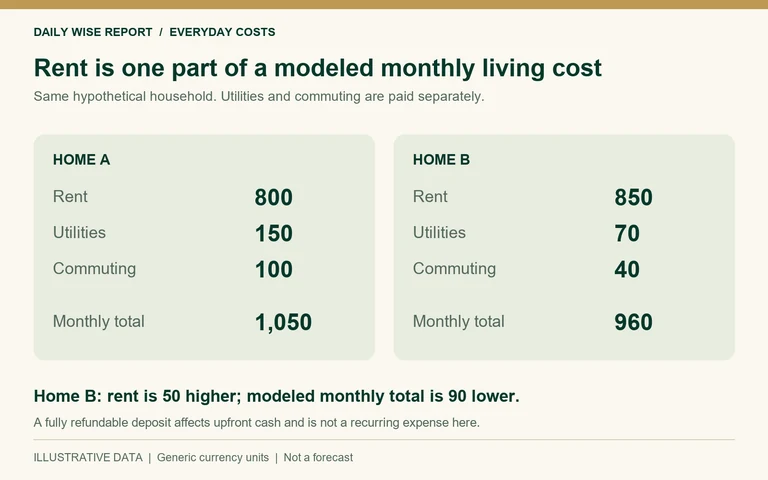 Analysis
Lower Rent Does Not Always Mean Lower Monthly Living Costs
Utilities, commuting and the timing of deposits can alter the comparison between two rental homes. The rent headline is only one line of the calculation.
Read full article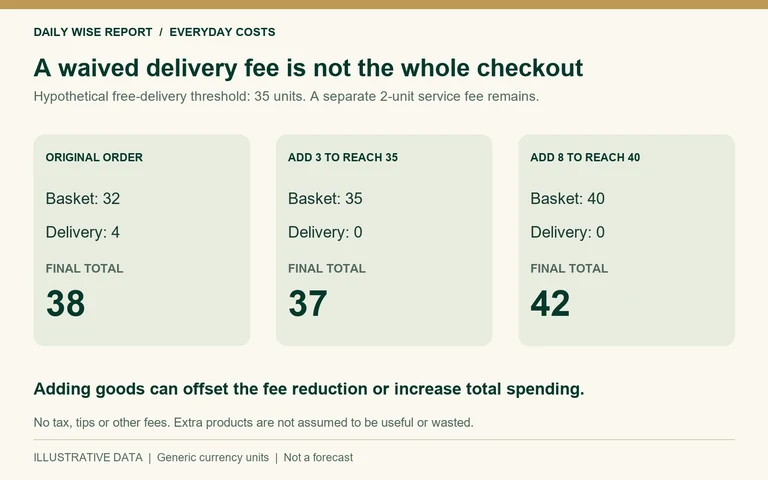 Analysis
Free Delivery Can Still Leave a Larger Checkout Total
A delivery charge is only one part of an order. Basket size and other fees determine whether reaching a threshold changes the amount actually paid.
Read full article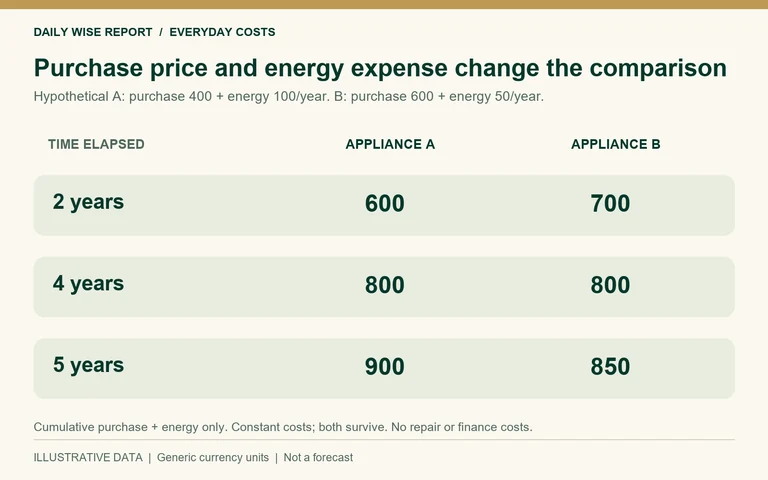 Analysis
A Cheaper Appliance Purchase Can Have a Higher Five-Year Energy Cost
Upfront price and annual operating expense can point in different directions. The result depends on usage, energy rates and how long the appliance remains in service.
Read full articleSmall charges. Lasting effects.
Explore recurring payments, pack sizes, discounts, and ownership costs—through mechanisms, examples, and limitations.
Subscriptions & Renewals
How recurring prices accumulate.
Explore concept ↓02Unit Prices & Pack Sizes
The price of a consistent quantity.
Explore concept ↓03Discounts & Checkout Costs
Why a percentage does not tell the whole story.
Explore concept ↓04Purchase Price & Ownership Costs
What continues after the initial payment.
Explore concept ↓Subscriptions & Renewals
Subscription charges repeat over an agreed billing period. An introductory price can differ from the renewal price, so the first payment may not describe the ongoing cost.
A hypothetical example
A hypothetical service costing 8 currency units monthly for three months and 12 monthly for the next nine costs 132 over the first year, before taxes or additional charges. This assumes uninterrupted access and no price changes beyond the stated increase.
Negative effects & limitations
Automatic renewals can lead to payments for unused services. Cancellation deadlines, minimum terms, or lost access can affect the outcome. Rules and cancellation rights vary by location and contract.
Unit Prices & Pack Sizes
A unit price expresses cost per standard quantity, such as a kilogram, litre, or item. It separates the pack price from the amount supplied.
A hypothetical example
A 500-gram pack priced at 3 currency units costs 6 per kilogram. A 750-gram pack priced at 4.80 costs 6.40 per kilogram. The larger pack has a higher unit price in this example; neither price establishes overall suitability.
Negative effects & limitations
Quality, concentration, usable quantity, and waste can change the practical comparison. A lower unit price can still involve a higher upfront payment. A reduction in pack size with an unchanged price raises cost per unit.
Discounts & Checkout Costs
A stated discount compares a selling price with a reference price. The percentage alone does not establish how the final price compares with alternatives or previous actual prices.
A hypothetical example
A hypothetical item marked down 20% from 100 costs 80. If delivery adds 15, the checkout total is 95 before any other applicable charges. It costs more than an otherwise comparable item delivered for 90.
Negative effects & limitations
An inflated reference price can exaggerate apparent savings. Minimum-spend conditions and add-ons may increase the amount paid. Quality, return terms, and availability also limit comparisons; disclosure rules differ across countries.
Purchase Price & Ownership Costs
The cost of owning a product can include its purchase price, installation, consumables, operation, maintenance, and disposal, less any resale proceeds. The result depends on the period measured.
A hypothetical example
In a simplified three-year example, product A costs 200 plus 80 per year to operate, totaling 440. Product B costs 300 plus 40 per year, totaling 420. These assumed totals exclude repairs, financing, resale value, and the time value of money.
Negative effects & limitations
A higher initial payment may constrain cash flow even when assumed lifetime costs are lower. Breakdowns, uncertain lifespan, changing usage, and future prices can reverse a comparison. The example does not establish which product a reader should choose.
Reference: US DOE: Life-cycle cost methodology (Chapter 8, PDF)
Sources & scope
FTC materials describe US consumer contexts; CMA materials describe UK unit pricing. They support explanations of pricing mechanisms, not claims that the same legal requirements apply worldwide.
The US Department of Energy reference explains appliance life-cycle costing. Our ownership example is a simplified undiscounted illustration, not a reproduction of the DOE model or a product performance claim.
All examples use hypothetical prices in generic currency units. Actual taxes, fees, usage, contractual terms, and consumer rights vary. Reviewed October 15, 2026.
Explain the price
Identify the quantity, billing period, and reference point.
Examine the cost
Include recurring charges, conditions, and negative effects.
State the limits
Separate numerical examples from real offers and outcomes.