Why a Lower Loan Rate Can Still Mean a Higher Borrowing Cost
Upfront charges, the amount actually received and the repayment schedule can alter what a headline interest rate appears to promise.
A lower loan rate can come with fees that outweigh the interest saving. Repayment length and the amount actually received also affect the cost, even when the quoted rates are accurate.
Interest is one cost component
For US mortgages, the Consumer Financial Protection Bureau distinguishes interest rate from APR. APR includes the rate and certain additional charges, and the source notes limits for adjustable-rate mortgages. This does not establish identical inclusion rules for every credit product or country.
Our example does not calculate a legal APR. It compares undiscounted cash charges for invented 10,000-unit loans: simple interest on the full principal for exactly one year, no interim repayments and principal repaid at the end.
| Measure | Loan A | Loan B |
|---|---|---|
| Principal | 10,000 | 10,000 |
| Simple annual interest rate | 5% | 6% |
| One-year interest | 500 | 600 |
| Upfront fee | 300 | 0 |
| Interest plus fee | 800 | 600 |
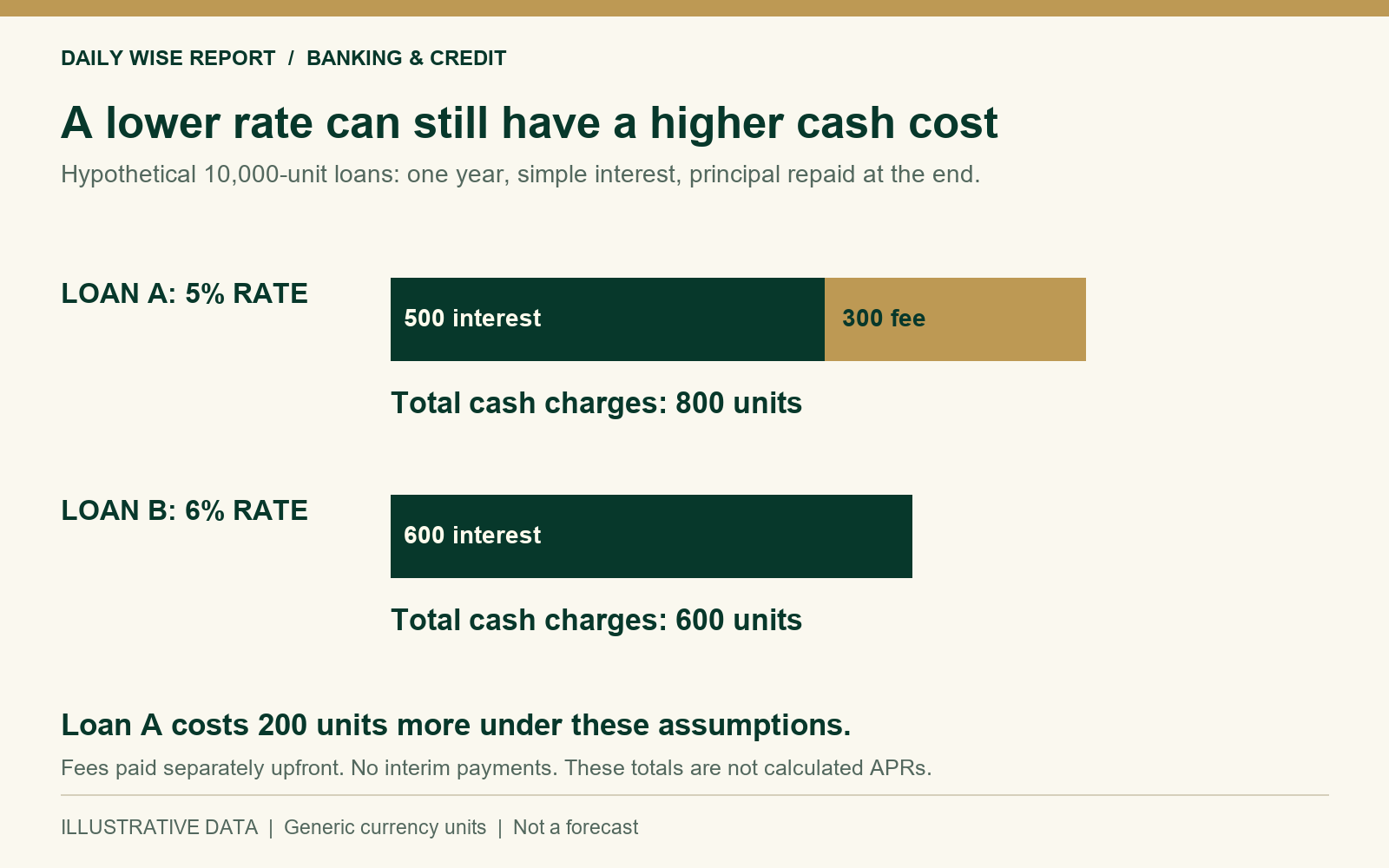
Loan A has a lower interest rate but costs 200 units more in this model. Its fee exceeds its 100-unit interest saving. Dividing 800 by 10,000 gives 8%; that simple cost ratio is not a formally calculated APR, because timing and the relevant calculation rules matter.
The principal may differ from usable proceeds
If a different contract deducts a 300-unit fee from a 10,000-unit disbursement, the borrower receives 9,700 while the principal remains 10,000. This arrangement differs from receiving 10,000 and paying 300 separately, even if the initial net cash is the same.
Adding a fee to principal may also make it bear interest. Its full cost depends on the contractual amounts received and repaid, beyond the fee printed on its own.
Timing changes the arithmetic
On a loan repaid monthly, each principal reduction changes the base for later interest. The table’s full-year interest calculation would therefore need to change. A longer term can lower each payment while letting interest accumulate for longer.
An upfront fee can weigh more heavily over a shorter period. A separate six-month simple-interest version of Loan A would charge 250 interest plus the unchanged 300 fee: 550 total. The fee does not halve merely because time does. Any actual early-repayment adjustment would depend on the agreement.
Scope and limitations
These structures are invented, not available offers. They exclude tax, late charges and default. Actual APR comparisons require consistent product scope and assumptions. No lender, loan or term is recommended.
Related reading
Why a Credit Card Payment Does Not Reduce Debt by the Same Amount
Leave a Reply