Why Using Less Electricity May Not Lower the Bill by the Same Percentage
Electricity consumption, the unit rate and fixed charges contribute separately. A change in one can be offset by a change in another.
A fall in electricity use may produce a smaller percentage drop in the bill because part of the charge stays fixed. A higher unit rate can offset more of the reduction.
Separate energy from the tariff
The US Department of Energy describes electricity consumption in kilowatt-hours. That measures energy, not a monetary charge. A unit rate converts consumption into a cost, while other tariff components can add amounts independently.
Great Britain’s Ofgem publishes unit rates and standing charges for its specific regulatory setting. That is an example of a tariff structure, not a global pricing rule. The figures below are invented and do not reproduce Ofgem rates.
| Scenario | Use | Rate per kWh | Fixed charge | Total |
|---|---|---|---|---|
| Starting case | 300 kWh | 0.20 | 15 | 75.00 |
| Lower use, same rate | 240 kWh | 0.20 | 15 | 63.00 |
| Lower use, higher rate | 240 kWh | 0.24 | 15 | 72.60 |
Consumption and spending change differently
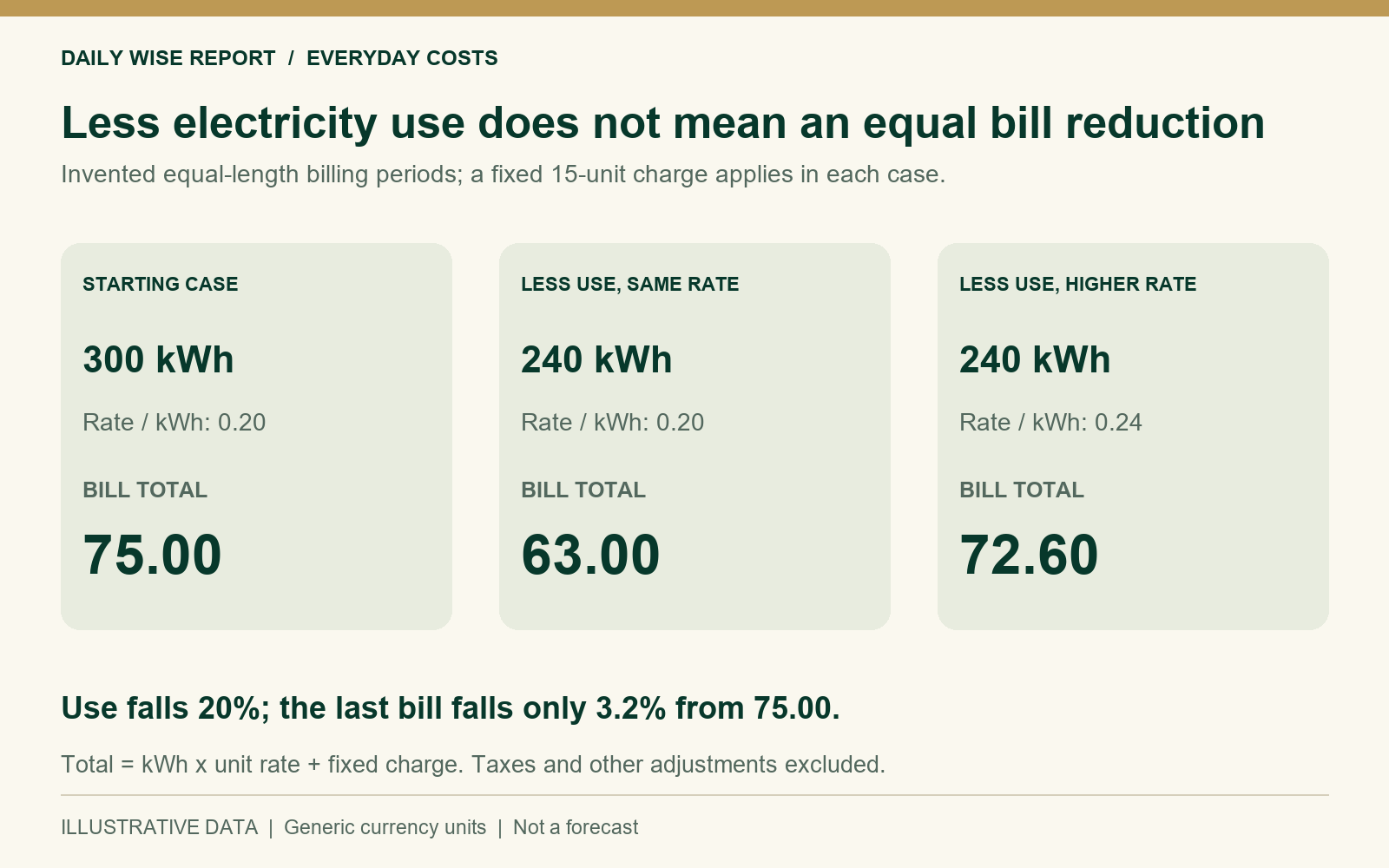
Use falls 20%, from 300 to 240 kWh. At the unchanged rate, the variable charge falls from 60 to 48. The fixed 15 remains, so the bill falls from 75 to 63, or 16%, rather than 20%.
In the third scenario, the unit rate also rises 20%. The variable charge becomes 240 × 0.24, or 57.60. Including the fixed charge gives 72.60, only 3.2% below the original bill. Lower use still reduces the modeled bill relative to what it would have been at the higher rate and original consumption.
Billing periods can distort a quick comparison
A daily standing charge accumulates with each billing day. A longer bill can therefore include more fixed charges and consumption even when daily use stays the same. The periods in this example have equal length and the same fixed charge.
Meter estimates, later reconciliations, time-of-use rates and credits can add other differences. A payment taken from a bank account may also be an installment toward an expected annual total rather than that month’s exact energy cost.
From device power to energy cost
A hypothetical device drawing a constant 2 kW for 1.5 hours uses 3 kWh. At 0.20 per kWh, its variable electricity cost is 0.60 for that session. Actual devices can cycle or change power, so a maximum wattage is not always a measure of continuous use.
Scope and limitations
All monetary amounts are hypothetical generic units. Climate, household needs and tariffs differ. The article explains a bill calculation without recommending usage reductions, a supplier or a tariff.
Related reading
A Cheaper Appliance Purchase Can Have a Higher Five-Year Energy Cost
Leave a Reply